
Advancing Circular Economy Through Research and Practice
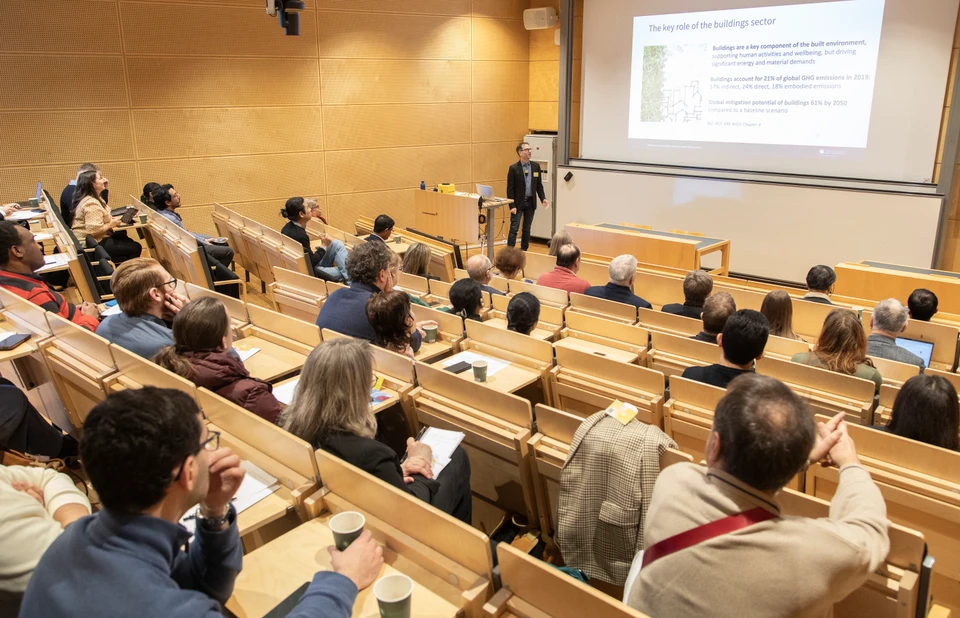
One of the main themes of the conference was the circularity of the built environment, reflecting its growing importance in reducing resource use, lowering carbon emissions, and increasing resilience in urban development. Several research papers presented during the conference explored circularity from social, technological, and systemic perspectives, demonstrating how circular principles can be embedded across different scales and sectors of the built environment.
Workshops Supporting Knowledge Exchange
Complementing the paper sessions, the conference also hosted workshops on circular economy in the built environment, providing interactive platforms for dialogue and knowledge exchange.
One workshop, Procurement and Circular Transition in Construction, brought together participants from academia and practice to discuss key challenges, share experiences, and identify opportunities for implementing circular solutions in real-world contexts.
A second workshop, Reprogramming Single-Family Housing: Spatial and Typological Transformations, focused on how spatial reconfiguration and typological change can support resource efficiency, demand reduction, and circular strategies within existing housing stock.
Strengthening Collaboration for Sustainable Urban Development
Overall, the SBEET Conference served as an important forum for interdisciplinary collaboration, reinforcing the circular economy's role as a key enabler of sustainable urban development. The discussions demonstrated how research and practice can work together to support the transition toward a more sustainable, resilient, and circular built environment.
For further information:
Name: Associate Professor Katarina Rupar-Gadd
Telephone: +46 709659602
Mail: katarina.rupar-gadd@lnu.se