
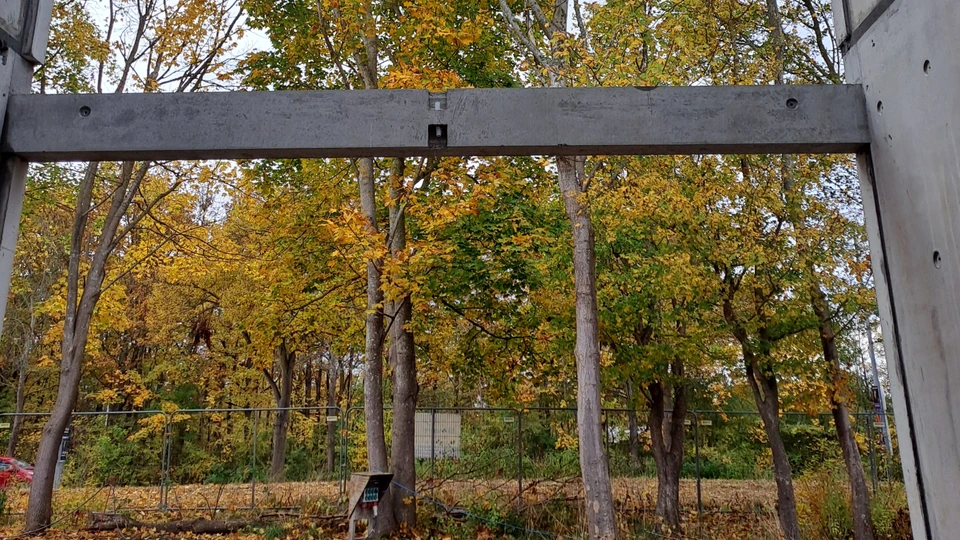
When the new clinic is completed, it will have a lower CO₂ footprint than standard buildings. This is partly because the intermediate floor is cast at a single level and the top floor is built in timber.
By casting the floor slab at one level and compressing the deltabeams, the floor height is reduced by approximately 30–40 centimetres, creating space for ventilation ducts and installations. This design choice makes it possible to include the top floor while still complying with the municipal requirement of a maximum height of twelve metres (the building is approximately 11.95 metres high). At the same time, one load-bearing layer of beams, which would normally run across the building, is “saved.”
This is part of the set of decisions needed to reduce material consumption while meeting the overall CO₂ requirements. In this case, the solution results in a reduction of approximately thirty cubic metres of concrete compared to traditional element construction.
The top floor is built as a timber structure, which has a significantly lower CO₂ footprint and is a lighter material. The additional floor is an efficient use of the building’s footprint, as foundations often have unused load-bearing capacity.