
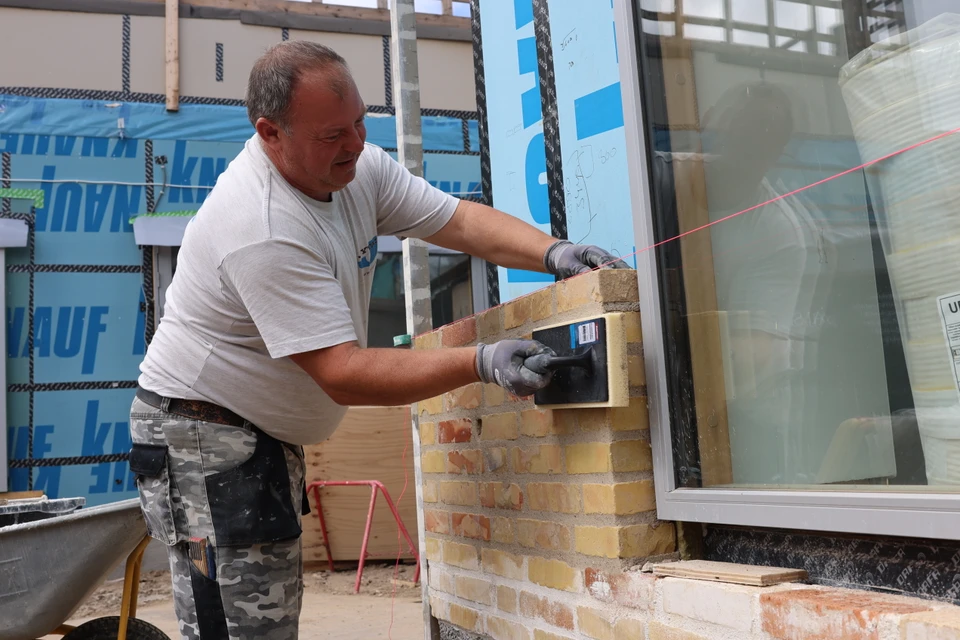
It has been an exciting and educational process, where clients, architects, engineers, and craftsmen have had to develop a shared understanding of where and how the building materials can be used most effectively. When disagreements arise about the choice of materials or how a task should be carried out, reference is made to standards, documentation, and reference mock-ups.
Here are some of the lessons we have learned
- Selective demolition: If you want to build up a larger stock of reused materials, you cannot rely solely on large machines. To avoid waste, it requires care, smaller machines, and manual labour. This extends the process – but creates a larger stock.
- Thorough sorting: The more fractions the materials are sorted into, the more can be reused. One example is radiators, which contain both iron and brass.
- Aesthetics: Reuse gives façades a different look with a more visible patina.
- Craftsmanship requirements: Working with reused bricks is more demanding. The bricks are stacked differently than new ones, and bricks with and without holes are often placed on the same pallet. This requires more precision in the bricklaying, as bricks with holes settle more. Unlike new bricks, often only one side of the reused ones can be used.
Legislation is necessary
If we want sustainable construction, legislation is necessary. Too many are skilled at exploiting loopholes when the rules are self-regulating or voluntary.
In Sweden, developers receive a tax deduction for using recycled materials – and that is a scheme that can make a difference. Here in Denmark, reused materials count as zero in the LCA calculation, and we need more of these kinds of incentives if we are to increase the level of reuse in construction.
We can only hope that the upcoming standards for circular construction will help drive development forward, so that sustainable building becomes an integrated part of ordinary construction projects.