
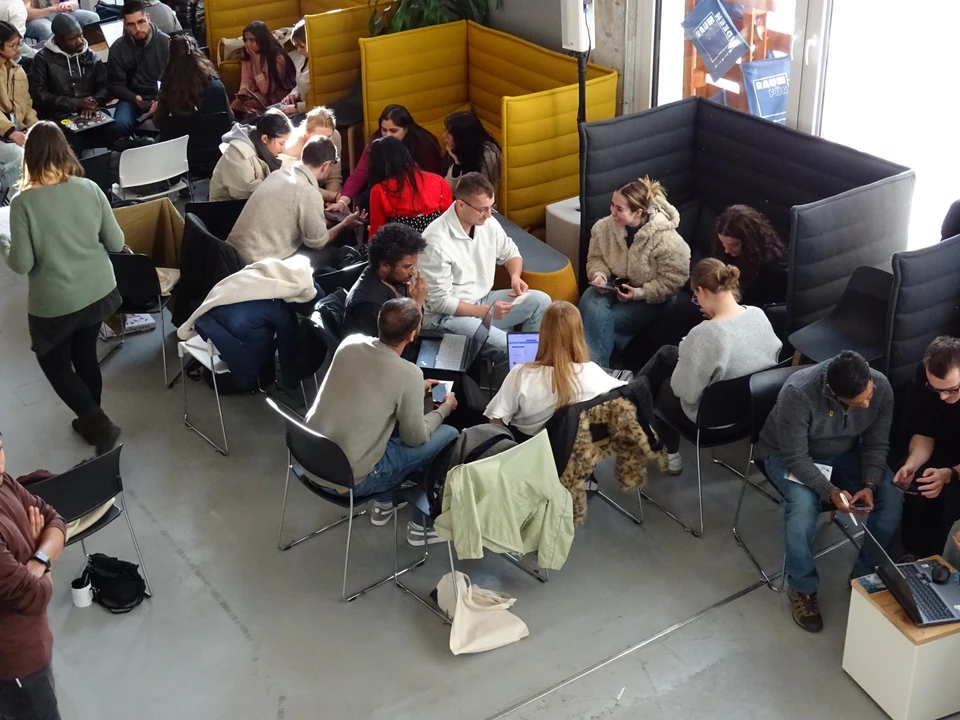
From the 17th to 21st of March 2025 students, professors, lecturers and researchers presented ideas and research, worked on and discussed a design tasks innovative results at the Wismar University of Applied Sciences Technology, Business and Design (Germany).
Lecturers from the universities Hartford (USA), Assumption (Thailand), STU (Slovakia) and Linnaeus (Sweden), last of which is also a FutureBalticBauhaus partner, contributed short inputs on the topic. The students' task was to plan a small research laboratory for the campus using circular materials and building components. They were to question conventional planning and design methods and create a new aesthetic through reuse.
Discussing and visualising aesthetics in circular design
By reusing materials and building parts of buildings condemned to demolition, architects can create sustainable, visionary architectural design concepts that blend the familiar with the new, resulting in a new aesthetic. This different output and new design aesthetic was shown in the students’ task results. These consisted of projects giving a new use to deserted campus buildings as well as designs for a new building consisting of reused materials from the campus or region around it, found on digital marketplaces online. In some concepts materials like bricks, windows and chairs were reused, others even aimed to reuse a part of a ship as a building shell. Innovative feedback and discussions evolved from the teamwork and presentations.
Workshop inspiring a circular mindset for tomorrow's architects
These approaches and conclusions will surely guide the research in our FutureBalticBauhaus project further, as well as ensure a more circular thinking for the future architects who attended the workshop.
The results of the survey the attendees filled out after the workshop showed a development of the interest in the topic as well as a readiness to design more circular in future projects.
By challenging traditional design methods and embracing circular thinking, the workshop sparked both creativity and a sense of responsibility among the students. Their visions and engagement may signal a promising shift towards more sustainable architectural practices.
For further information:
Kassandra Hellicar
Research Assistant at the Hochschule Wismar – University of Applied Sciences Technology, Business and Design, in Germany
Telephone: +49 (0) 3841 753 7138
Mail: kassandra.hellicar@hs.wismar.de